- May 19, 2026
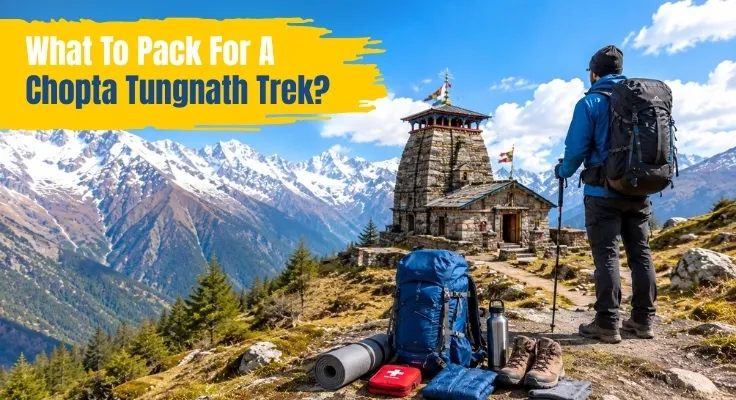
India is an excellent destination for trekking and mountaineering, boasting challenging treks that draw climbers and hikers from across India and around the world. With so many options available, which one is best to start with? A good choice would be the Chopta Tungnath Trek, located in the Garhwal Himalayas and home to the highest temple dedicated to Lord Shiva. The trek takes five days, beginning at Sari Village and ending at Tungnath and Chandrashila. When planning this trek, trekkers should conscientiously pack essential gear to ensure a smooth experience. The following article provides a detailed checklist of the gear and essentials to carry in your backpack.
Here's a List of Must-Carry Trekking Essentials for the Chopta Tungnath Trek:
1. Robust Backpack
A backpack will be your faithful companion on this adventure, holding every essential gear you need during the trek. Therefore, your companion must be wisely chosen to ensure a convenient adventure. It must be sturdy and robust, with padded straps and a hip belt to stabilise the weight properly and minimise the strain on your back. Additionally, your backpack must feature ample compartments and pouches so you can carry all required equipment & supplies.
2. Sturdy Hiking Boots
For a trek like Chopta Tungnath, a sturdy and solid hiking boot would be an excellent choice. Invest in high-quality boots that fit well and support your heels, with minimal slippage. Also, ensure it is comfortable enough to allow you to move your toes properly, with enough room to avoid blisters. It must be made of a rigid material to protect your feet on rocky, rough paths, with complete water resistance. The quality of your boots will determine the level of comfort you have and the protection against injury.
3. Essential Clothing
The weather around the mountains remains unpredictable; a bright, sunny day can suddenly take a drastic turn. Thus, protecting your body against harsh weather is crucial, so you must put on the essential layers of clothing. To begin with, you must keep the sweat away from your body by layering a moisture-wicking cloth made of polyester, merino wool, or nylon. To keep your body warm and composed, consider applying a heat-trapping layer to lock in the heat. Finally, add a waterproof jacket to protect you against rain and chilly breezes.
4. Sleeping Bags & Mats
This trek would last for five consecutive days, and to be energetic throughout the journey, trekkers must get ample rest. As discussed above, the weather in the Himalayas is unpredictable; thus, a compact, well-insulated sleeping bag is essential for unwinding. Regardless of the weather, the average temperature on a typical day at Chopta Tungnath is around 10°, and it drops well below at night. Thus, the bag will protect you against the unfavourable weather conditions. To add more insulation and comfort, one must carry a good-quality mat.
5. Water Supply
Trekkers must remain hydrated to maintain energy levels, mitigate the effects of high altitude, and prevent dehydration. Thus, it becomes crucial to have an adequate water supply; for that, consider carrying reusable bottles and hydration packs to meet your hydration needs. Additionally, invest in purification tablets or a high-quality LifeStraw to drink clean water from the natural reservoirs and sources.
6. Trekking Poles
Trekking poles are a highly recommended trekking essential; trekkers must have them on their journey. It has more significance than just being a pole, as it allows you to stabilise on uneven paths, mitigating the impacts on your joints, and improving balance. Single-handedly, it would protect your knees as you make your way through rocks, streams, or rough terrain, eliminating challenges on the trek. Hence, invest in a high-quality trekking pole with adequate shock absorption, a sturdy shaft, a firm grip, and a strap to wrap around your hand.
7. Navigation Devices
In remote or mountainous regions, phones' GPS doesn't work, leaving you to rely on analogue navigation devices. Consider carrying a meticulous map of the area or trekking path, a robust compass, or a GPS Navigation tool to keep track of your location, path, and planned route. Also, wear a headlamp and carry extra batteries to improve visibility. The tools will allow you to stay on the planned route and continue trekking even during low-visibility conditions.
8. Medical Supplies
A first aid kit is essential for any trek, containing necessary medications and supplies to treat minor injuries. It should include bandages, ointments, antiseptic wipes, painkillers, and personal medicines for existing conditions. Since obtaining medical help on a trek is often tough, carrying these essentials would prevent your injuries from worsening. Also, learning the basics of first aid or immediate care if needed is appropriate, as it would allow you to stabilise the crucial situations, especially when help is far away.
9. Processed Sustenance
Processed Sustenance, or packaged food items, are indispensable to your trekking luggage. These processed sustenances include energy bars, dried fruits, nuts, or instant noodles, which are lightweight, compact, and easy to eat or prepare. These eatables are concentrated sources of energy and nutrients, providing trekkers with sustained energy and helping them maintain strength and physical performance. In unfavourable situations, these eatables can be beneficial.
10. Vital Personal Items
Apart from all the items listed above, there are some belongings you must carry to ensure your safety. Primarily, carry the essential ID proofs and documents, which are crucial for identity verification. Trekkers must also carry some cash in local currency to make emergency purchases on the route. Consider carrying your smartphone, which should be fully charged and ready to use in emergencies. Also, be sure to keep it in airplane mode when not in use. Additionally, carry flashlights, a pocket knife, extra batteries, and a power bank.
Conclusion
Chopta Tungnath Trek is undoubtedly one of the most beautiful treks in India, and it promises a memorable experience for trekkers. However, these adventures can be made even better if your backpack contains essential gear and supplies that you will need during the trek. The article above briefly discusses the essential items you should carry for a seamless experience at Chopta Tungnath.
Frequently Asked Questions (FAQs)
How many days would it take me to complete the Chopta Tungnath Trek?
The Chopta Tungnath Trek would take around two to three days, depending on whether you include the Chandrashila summit.
What should be my budget for the Chopta Tungnath Trek?
Generally, you can expect the budget to range from INR 3,500 to INR 12,000/person, depending on your travel style.
Which railway station is the nearest to begin the Chopta Tungnath Trek?
The nearest railway station to Chopta is Yog Nagari Rishikesh Railway Station, located 205 kilometers from the trek.
Is there any registration or paperwork needed for the Chopta Tungnath Trek?
No prior online permits are required, but you must pay an entry fee to the Forest Department at the local post office in Chopta or Sari Village.
How long does it take to reach the Chandrashila summit from the Tungnath?
The Chandrashila peak is located about 1.5 kilometers from the Tungnath Temple, and it takes about an hour or two to reach.
Is there an oxygen problem in Tungnath?
Yes, you will experience a slight oxygen shortage because Tungnath is situated at an altitude of about 3,680 meters, while the Chandrasila summit is at 4,000 meters.
Can beginners complete the Chopta Tungnath Trek?
Yes, the Chopta Tungnath Trek is completely beginner-friendly and is one of the easiest treks to complete.
Contact us